With the health bill passed, the government is now setting about forcing the market into the NHS. Colin Leys looks at what is likely to happen next
Red Pepper
April 2012
Photo: DulcieLee/Flickr
Andrew Lansley and the Tories continue to claim that under their plans to privatise the NHS ‘services will still be free at the point of use’. But this is seriously misleading. They fail to add a key proviso – provided the service is still available on the NHS. In reality, a growing list of services will not be available, and so won’t be free.
This is already happening. People who suffer from a range of conditions that are not life-threatening, but are often painful and even disabling, are being told to pay for treatment or go without. The health bill will make this more common, and taking out private insurance for such problems will become widespread.
At the same time the government plans to expand the use of personal health budgets, administered for us by ‘intermediaries’. Coupled with the normalisation of private health insurance, personal health budgets could easily become a tax-funded subsidy for private healthcare for the better-off, triggering a further contraction of free NHS care for the poor. New charges or ‘co‑payments’ also look likely for some aspects of NHS care.
Showing posts with label International medicare. Show all posts
Wednesday, April 18, 2012
Tuesday, April 17, 2012
France: When Health Care Is Downsized by Austerity
Translated Sunday 15 April 2012, by Gene Zbikowski and reviewed by Bill Scoble
L' Humanite
April 15, 2012
In mid-March, the unions at the teaching hospital in Toulouse learned of an “anti-crisis performance plan.” On the menu: grouping, outsourcing of services and reconsideration of the pertinence of health care acts. It is an austerity plan that conceals its name and endangers the provision of health care.
“Don’t let the crisis enter the teaching hospital without forewarning.” Management’s “anti-crisis performance plan”, which was presented in mid-March to the Committee on Hygiene, Safety and Working Conditions (CHSCT) of the Toulouse teaching hospital, has put all the staff on alert. It talks, pell-mell, about “restructuring”, “grouping”, “the proper distribution of staff”, “the organization of work”, “the outsourcing of services”, “optimization”… It is an austerity plan which conceals its name, but which is all the more alarming as, for the past few years, the staff at “the best teaching hospital in France” have been subjected to many restructuring projects and “the setting up of mechanisms to ease the breaking up of the public hospital,” according to the CGT union.
L' Humanite
April 15, 2012
In mid-March, the unions at the teaching hospital in Toulouse learned of an “anti-crisis performance plan.” On the menu: grouping, outsourcing of services and reconsideration of the pertinence of health care acts. It is an austerity plan that conceals its name and endangers the provision of health care.
“Don’t let the crisis enter the teaching hospital without forewarning.” Management’s “anti-crisis performance plan”, which was presented in mid-March to the Committee on Hygiene, Safety and Working Conditions (CHSCT) of the Toulouse teaching hospital, has put all the staff on alert. It talks, pell-mell, about “restructuring”, “grouping”, “the proper distribution of staff”, “the organization of work”, “the outsourcing of services”, “optimization”… It is an austerity plan which conceals its name, but which is all the more alarming as, for the past few years, the staff at “the best teaching hospital in France” have been subjected to many restructuring projects and “the setting up of mechanisms to ease the breaking up of the public hospital,” according to the CGT union.
Wednesday, April 11, 2012
UK: 'Healthy competition’ in the NHS is a sick joke
Real health choice under the NHS reform Bill doesn't exist, and the so-called market is a mockery.
By Max Pemberton
The Telegraph
April 9, 2012
By Max Pemberton
The Telegraph
April 9, 2012
Richard Branson and his daughter Holly Photo: REX
This was no April Fool’s joke, though I had to smile at the thought of Virgin managing sexual health clinics. In reality, the joke may be on all of us, as Richard Branson’s company becomes one of the first of many vultures to start picking over the rich, tender flesh of the NHS now that it has been splayed open by the Bill.
His daughter, Holly Branson, was a few years below me at medical school. I remember thinking how good it was that someone steeped in privilege had seemingly decided to dedicate her life to serving other people. I had a vision – somewhat idealised, I know – of her working in the East End, providing care to the deprived and poverty-stricken. But no. After a brief stint as a junior doctor at a London hospital, she quit the NHS to work for her father. It saddens me to see someone who underwent the same training I did stand by as their family business profits from the sick and undermines the very institution that provided them with their education.
Richard Branson likes to be thought of as an affable, benign maverick, on his way to becoming a national treasure. He’s the cuddly face of corporate Britain. But just because he has a beard and looks like Noel Edmonds does not mean his multinational business is any less aggressive and expansionist than the next.
What the Virgin Care takeover in Surrey really exposes are the two fundamental lies that have been peddled by the Government over the past year in attempts to manage the PR disaster that was the NHS Reform Bill.
The first is the flat denial that the Bill represented any sort of privatisation of the NHS, despite it being obvious to anyone who read it that this is precisely what it was.
Wednesday, March 21, 2012
"Medicare's 50th Anniversary" now a blog book
NYC
March 22, 2012
Don't want to spend time scrolling down this blog or searching for something? Check out the blog book below to see if assists you.
You can also download the book or embed it.
March 22, 2012
Don't want to spend time scrolling down this blog or searching for something? Check out the blog book below to see if assists you.
You can also download the book or embed it.
Sunday, March 18, 2012
Tuesday, March 13, 2012
Health Care Failure: The Occupied Palestinian Territories
By Ravi Katari
Dissident Voice
March 13th, 2012
Health care is a unique issue in international politics and discussions of modern civilization. As an institutional entity, it has both a substantial and direct implication regarding the very existence of human populations. That’s in contrast to markers such as employment, GDP, or literacy that have effects that are slightly harder to trace out. Indeed, the authors of the 2010 World Health Report recognized that “promoting and protecting health is essential to human welfare and sustained economic and social development” and that people “rate health one of their highest priorities” . As a majorly accepted sentiment, it becomes morally difficult to justify institutional health care inequalities if we choose to believe in principles of democracy and Rawlsian equality of opportunity.
If, as a nation, we impose economic sanctions on another country as a method of foreign policy, it’s okay for that nation’s economy to suffer because it puts pressure on the government and state leaders to capitulate. What you’re not allowed to talk about are the direct outcomes on the population because the point is to get the boogey man—Saddam or Osama—but not to cause a humanitarian crisis characterized by the starvation of children in, say, Afghanistan. Unfortunately, severe economic decline and mass suffering are inexorably linked as is clearly demonstrated by the Palestinian condition.
Dissident Voice
March 13th, 2012
Health care is a unique issue in international politics and discussions of modern civilization. As an institutional entity, it has both a substantial and direct implication regarding the very existence of human populations. That’s in contrast to markers such as employment, GDP, or literacy that have effects that are slightly harder to trace out. Indeed, the authors of the 2010 World Health Report recognized that “promoting and protecting health is essential to human welfare and sustained economic and social development” and that people “rate health one of their highest priorities” . As a majorly accepted sentiment, it becomes morally difficult to justify institutional health care inequalities if we choose to believe in principles of democracy and Rawlsian equality of opportunity.
If, as a nation, we impose economic sanctions on another country as a method of foreign policy, it’s okay for that nation’s economy to suffer because it puts pressure on the government and state leaders to capitulate. What you’re not allowed to talk about are the direct outcomes on the population because the point is to get the boogey man—Saddam or Osama—but not to cause a humanitarian crisis characterized by the starvation of children in, say, Afghanistan. Unfortunately, severe economic decline and mass suffering are inexorably linked as is clearly demonstrated by the Palestinian condition.
Sunday, March 11, 2012
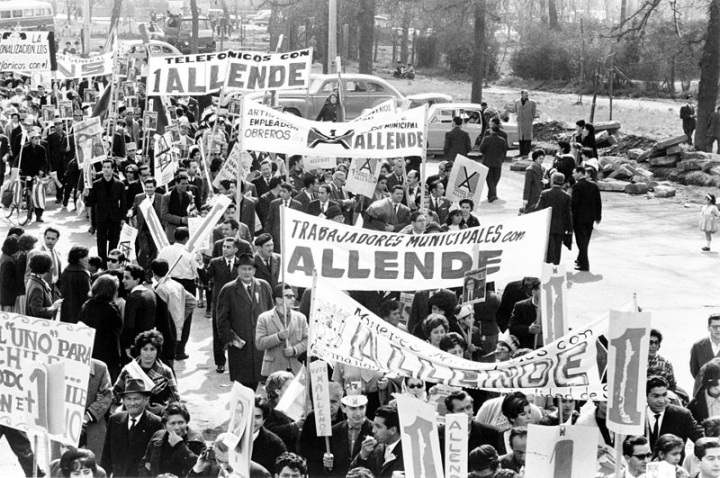
The Lessons of Chile
By Susan Rosenthal
(Chapter 9 of SICK and SICKER)
March 11, 2012
As a new generation takes up the fight for a humane world, it is essential to review the lessons of the past.
The last great upsurge in struggle, during the 1960s and early 1970s, achieved significant advances in health care. Americans won Medicaid and Medicare, and Canadians won a national medical system. There were other victories, like the trouncing of the US in Vietnam. And there were bloody defeats, like the military coup in Chile. Vietnam proved that even the mightiest power can be brought down. Chile also offers valuable lessons.
“The health sector in any society mirrors the rest of that society,” wrote Vicente Navarro in What Does Chile Mean: An Analysis of the Health Sector Before, During, and After Allende’s Administration. The following review of Navarro’s account highlights the experience of Chilean health workers who fought a revolutionary struggle to create a truly democratic health care system.
A Class-Divided Society
Navarro describes Chile as an underdeveloped nation. Yet it was still a capitalist country and in many ways not so different from the United States or Canada.
In 1970, Chile was an urban, industrial society. The top 10 percent of the population controlled 60 percent of the wealth, while the working-class majority (70 percent of the population) held only 12 percent of the wealth. Similar class disparities exist in the US and Canada, being much more extreme in the US where the top one percent controls more wealth than 95 percent of the remaining population.
In Chile, as in all capitalist countries, class divisions are reproduced in the medical system.
Read more HERE.
(Chapter 9 of SICK and SICKER)
March 11, 2012
As a new generation takes up the fight for a humane world, it is essential to review the lessons of the past.The last great upsurge in struggle, during the 1960s and early 1970s, achieved significant advances in health care. Americans won Medicaid and Medicare, and Canadians won a national medical system. There were other victories, like the trouncing of the US in Vietnam. And there were bloody defeats, like the military coup in Chile. Vietnam proved that even the mightiest power can be brought down. Chile also offers valuable lessons.
“The health sector in any society mirrors the rest of that society,” wrote Vicente Navarro in What Does Chile Mean: An Analysis of the Health Sector Before, During, and After Allende’s Administration. The following review of Navarro’s account highlights the experience of Chilean health workers who fought a revolutionary struggle to create a truly democratic health care system.
A Class-Divided Society
Navarro describes Chile as an underdeveloped nation. Yet it was still a capitalist country and in many ways not so different from the United States or Canada.
In 1970, Chile was an urban, industrial society. The top 10 percent of the population controlled 60 percent of the wealth, while the working-class majority (70 percent of the population) held only 12 percent of the wealth. Similar class disparities exist in the US and Canada, being much more extreme in the US where the top one percent controls more wealth than 95 percent of the remaining population.
In Chile, as in all capitalist countries, class divisions are reproduced in the medical system.
Read more HERE.
Friday, March 9, 2012
USA: The Struggle for Universal Health Care
By Margaret Flowers
Tikkun Magazine
Winter 2011
Once my eyes were open, I couldn't ignore what was going on. Awareness crept up, starting with a sense that something was wrong. That sense led me to examine the suffering around me -- suffering rooted in the injustice of our health system. I cannot close my eyes on the human toll of corporate domination in this nation.
This is why I devote my time to working for a health system in the United States that meets the human rights principles of universality, equity, and accountability: a single-payer national health insurance. Anything less will prolong suffering and unnecessary death. Every person in this country must have access to the same high-quality standard of health care.
Tikkun Magazine
Winter 2011
Once my eyes were open, I couldn't ignore what was going on. Awareness crept up, starting with a sense that something was wrong. That sense led me to examine the suffering around me -- suffering rooted in the injustice of our health system. I cannot close my eyes on the human toll of corporate domination in this nation.
This is why I devote my time to working for a health system in the United States that meets the human rights principles of universality, equity, and accountability: a single-payer national health insurance. Anything less will prolong suffering and unnecessary death. Every person in this country must have access to the same high-quality standard of health care.
Tuesday, March 6, 2012
Treating Sick Rich Folks in America
By John Hightower
Nation of Change
5 March 2012
“A hospital with a concierge? Yes. There’s one called Eleven West, an exclusive wing of New York’s Mount Sinai Medical Center.”
The plutocratic elite is perverting health care into a luxury commodity.
In these trying times of health care austerity, it reaffirms one's faith in humanity to learn that many hospitals are now going the extra mile to provide top quality care for all.
For all super-rich people that is. These folks are so rich they can buy their way into "amenities units" built into secluded sections of many hospitals. It's not medical care that they're peddling to an elite clientele, but the personal pampering that the superrich expect in all aspects of their lives.
"I was supposed to be in Buenos Aires last week taking tango lessons," a Wall Street executive explained matter-of-factly to a New York Times reporter, "but unfortunately, I hurt my back, so I'm here with my concierge."A hospital with a concierge? Yes. There's one called Eleven West, an exclusive wing of New York's Mount Sinai Medical Center. "We pride ourselves on getting anything the patient wants," beamed its director of hospitality. "If they have a craving for lobster tails and we don't have them on the menu, we'll go out and get them."
From New York to Los Angeles, hospitals that draw huge subsidies from taxpayers (and often are so overcrowded that regular patients are lucky to get a gurney in the hallway) have set aside entire floors for $2,400-a-day deluxe suites. They come with butlers, 5-star meals, marble baths, imported bed sheets, special kitchens, and other amenities for swells who have both insurance and cash to burn.
It's repugnant for the plutocratic elite to pervert health care into a luxury commodity. It splits asunder America's essential, uniting principle of the common good. To push for a national policy that treats health care as a fundamental human need — for all — contact Physicians for a National Health Program: www.pnhp.org.
Nation of Change
5 March 2012
“A hospital with a concierge? Yes. There’s one called Eleven West, an exclusive wing of New York’s Mount Sinai Medical Center.”
The plutocratic elite is perverting health care into a luxury commodity.In these trying times of health care austerity, it reaffirms one's faith in humanity to learn that many hospitals are now going the extra mile to provide top quality care for all.
For all super-rich people that is. These folks are so rich they can buy their way into "amenities units" built into secluded sections of many hospitals. It's not medical care that they're peddling to an elite clientele, but the personal pampering that the superrich expect in all aspects of their lives.
"I was supposed to be in Buenos Aires last week taking tango lessons," a Wall Street executive explained matter-of-factly to a New York Times reporter, "but unfortunately, I hurt my back, so I'm here with my concierge."A hospital with a concierge? Yes. There's one called Eleven West, an exclusive wing of New York's Mount Sinai Medical Center. "We pride ourselves on getting anything the patient wants," beamed its director of hospitality. "If they have a craving for lobster tails and we don't have them on the menu, we'll go out and get them."
From New York to Los Angeles, hospitals that draw huge subsidies from taxpayers (and often are so overcrowded that regular patients are lucky to get a gurney in the hallway) have set aside entire floors for $2,400-a-day deluxe suites. They come with butlers, 5-star meals, marble baths, imported bed sheets, special kitchens, and other amenities for swells who have both insurance and cash to burn.
It's repugnant for the plutocratic elite to pervert health care into a luxury commodity. It splits asunder America's essential, uniting principle of the common good. To push for a national policy that treats health care as a fundamental human need — for all — contact Physicians for a National Health Program: www.pnhp.org.
Bolivia Prescribes Solidarity
Health Care Reform under Evo Morales
By Jason Tockman
NACLA
Aug 16 2009
The first time Mario Terán faced a doctor from Cuba, he killed him. He heard Che Guevara utter his famous last words: "Shoot, coward; you are only going to kill a man," and in October of 1967, in a small schoolhouse in rural Bolivia, Sergeant Terán fired a round of bullets into the revolutionary's body.
Forty years later, Terán walked into a medical clinic staffed by Cuban physicians. Disguising his identity, he requested medical attention. His cataracts were corrected, his sight restored.
Like hundreds of thousands of other Bolivians, Che's killer is a beneficiary of Operación Milagro (Operation Miracle), the cornerstone of Cuba's programs of social solidarity in the country. In addition to almost 2,000 Cuban medical personnel in Bolivia, aid from Cuba and Venezuela has funded the opening or expansion of at least 20 hospitals and 11 eye clinics across the country.
By Jason Tockman
NACLA
Aug 16 2009
| A sculpture of Ernesto “Che” Guevara stands in La Higuera, Bolivia, where he was hunted down and killed. Now doctors from Cuba provide healthcare there. |
Forty years later, Terán walked into a medical clinic staffed by Cuban physicians. Disguising his identity, he requested medical attention. His cataracts were corrected, his sight restored.
Like hundreds of thousands of other Bolivians, Che's killer is a beneficiary of Operación Milagro (Operation Miracle), the cornerstone of Cuba's programs of social solidarity in the country. In addition to almost 2,000 Cuban medical personnel in Bolivia, aid from Cuba and Venezuela has funded the opening or expansion of at least 20 hospitals and 11 eye clinics across the country.
Wednesday, February 29, 2012
The Battle for the NHS
By Alex Doherty, Colin Leys, Ed Lewis
New Left Project
February 29, 2012
Colin Leys is an honorary professor of politics at Goldsmiths College London, who has worked in the UK, Africa and Canada, and whose latest book is The Plot Against the NHS (with Stewart Player). He spoke to NLP co-editors Alex Doherty and Ed Lewis about the political struggle over the NHS and considers what those determined to save it can still do.
Given the unpopularity of the Health and Social Care Bill some commentators have suggested that this might become a poll tax moment for the government. Is this a realistic assessment of the damage the bill may do to the government and, if so, why do you think they are persisting with it?
The analogy with the Poll Tax is relevant but not exact. The poll tax was a very simple issue, and very plainly unjust. It also required citizens to do something – to pay the tax – and when enough of them felt angry enough, and when the anger was widespread enough, a significant minority decided to risk jail and refuse to pay, creating a serious crisis of legitimacy. In contrast, the Health Bill is hugely complex, its real meaning has been deliberately obscured, and it doesn’t require citizens to do anything. The poll tax was also introduced in Scotland first, aggravating Scottish resentment of all Thatcher’s policies, whereas the Health Bill only applies to England, where a social democratic culture is less strongly entrenched.
A further difference is that the poll tax was firmly identified with Thatcher personally, whereas Lansley, it is said, lacks strong support both in the parliamentary party and among the Conservative rank and file.
New Left Project
February 29, 2012
Colin Leys is an honorary professor of politics at Goldsmiths College London, who has worked in the UK, Africa and Canada, and whose latest book is The Plot Against the NHS (with Stewart Player). He spoke to NLP co-editors Alex Doherty and Ed Lewis about the political struggle over the NHS and considers what those determined to save it can still do.
Given the unpopularity of the Health and Social Care Bill some commentators have suggested that this might become a poll tax moment for the government. Is this a realistic assessment of the damage the bill may do to the government and, if so, why do you think they are persisting with it?
The analogy with the Poll Tax is relevant but not exact. The poll tax was a very simple issue, and very plainly unjust. It also required citizens to do something – to pay the tax – and when enough of them felt angry enough, and when the anger was widespread enough, a significant minority decided to risk jail and refuse to pay, creating a serious crisis of legitimacy. In contrast, the Health Bill is hugely complex, its real meaning has been deliberately obscured, and it doesn’t require citizens to do anything. The poll tax was also introduced in Scotland first, aggravating Scottish resentment of all Thatcher’s policies, whereas the Health Bill only applies to England, where a social democratic culture is less strongly entrenched.
A further difference is that the poll tax was firmly identified with Thatcher personally, whereas Lansley, it is said, lacks strong support both in the parliamentary party and among the Conservative rank and file.
Thursday, February 23, 2012
UK: An end to Bevan’s dream of free healthcare for all Britons?
By Allyson Pollock
Our Kingdom
20 February 2011
The Government’s Health and Social Care Bill published on 19th January is now in the Committee stage, having passed its second reading in the Commons by a majority of 86. But if the Bill is passed without major amendments it will forever be known as the “abolishing the NHS” Bill. If enacted, up to 100 billion pounds annually of taxpayers money is likely to be handed over to large corporations that will run and operate our NHS services for profit. Make no mistake, the NHS will be there but in name only: health services will be run on US lines by, and largely for, shareholders and profit, while denial of care will escalate.
Our Kingdom
20 February 2011
The Government’s Health and Social Care Bill published on 19th January is now in the Committee stage, having passed its second reading in the Commons by a majority of 86. But if the Bill is passed without major amendments it will forever be known as the “abolishing the NHS” Bill. If enacted, up to 100 billion pounds annually of taxpayers money is likely to be handed over to large corporations that will run and operate our NHS services for profit. Make no mistake, the NHS will be there but in name only: health services will be run on US lines by, and largely for, shareholders and profit, while denial of care will escalate.
Tuesday, February 21, 2012
Italy’s healthcare crisis
Il Fatto Quotidiano
February 21, 2012
Forty five thousand less beds and overall hospital capacity reduced by 15%, twelve hour waits in A&E and serious staff shortages: these are the headline results of official figures covering the past decade that have been analysed by Il Fatto Quotidiano newspaper.
The picture in big cities is the most serious with health services ‘close to collapse’ in Rome, Turin and Naples, according to data studied by the paper.
The number of beds per thousand inhabitants has fallen from 5.1 to 4.2 in 12 years, leaving Italy well below the European average of 5.5 beds per thousand inhabitants.
Cuts in hospital capacity were supposed to be balanced by the expansion of non-acute ‘community’ services under reforms pursued over the past decade, but this has not materialised.
Increased waiting times for public health services and a cut in capacity - the public health system has seen a 17% cut in capacity compared to 5.3% for the private sector – have seen in increase in the use of private clinics in 12 out of the country’s 20 regions.
Severe cuts over the past 15 years has gone hand in hand with healthcare reforms that granted powers to regional administrations to spend centrally provided funds as they saw fit. This resulted in a freeze on hiring healthcare workers, the use of an increasingly casualised workforce and healthcare shopping whereby people (who can) travel to the best facilities typically, in the richer north, creating a postcode lottery of care.
The reforms also allowed a big expansion in state-funded private providers.
For example, Veneto region, run by the extreme right wing Northern League splashed out over a four year period Euros 200 million of taxpayers money to private clinics.
Private clinics, some of which have church links, are also a key target for investment from organised crime and there has been a number of high profile financial scandals linked to them.
The country spends 9% of its gross domestic product on healthcare, putting it behind the UK, France and Germany.
February 21, 2012
![]() |
| The entrance of the Umberto I Polyclinic |
The picture in big cities is the most serious with health services ‘close to collapse’ in Rome, Turin and Naples, according to data studied by the paper.
The number of beds per thousand inhabitants has fallen from 5.1 to 4.2 in 12 years, leaving Italy well below the European average of 5.5 beds per thousand inhabitants.
Cuts in hospital capacity were supposed to be balanced by the expansion of non-acute ‘community’ services under reforms pursued over the past decade, but this has not materialised.
Increased waiting times for public health services and a cut in capacity - the public health system has seen a 17% cut in capacity compared to 5.3% for the private sector – have seen in increase in the use of private clinics in 12 out of the country’s 20 regions.
Severe cuts over the past 15 years has gone hand in hand with healthcare reforms that granted powers to regional administrations to spend centrally provided funds as they saw fit. This resulted in a freeze on hiring healthcare workers, the use of an increasingly casualised workforce and healthcare shopping whereby people (who can) travel to the best facilities typically, in the richer north, creating a postcode lottery of care.
The reforms also allowed a big expansion in state-funded private providers.
For example, Veneto region, run by the extreme right wing Northern League splashed out over a four year period Euros 200 million of taxpayers money to private clinics.
Private clinics, some of which have church links, are also a key target for investment from organised crime and there has been a number of high profile financial scandals linked to them.
The country spends 9% of its gross domestic product on healthcare, putting it behind the UK, France and Germany.
Monday, February 13, 2012
U.S. citizens deserve better health care
The Gazette (Iowa)
February 13, 2012
Social Security and Medicare are not entitlements. We paid for this all the years we worked.
It started in 1935 with 99 percent of Republicans voting against it. In 1939, the Republicans tried again to kill Social Security. In 1982, President Reagan got the OK to use $33 million to fight unions out of the Medicare funds. The unions got this stopped. In 1977, 88 percent of the Republicans voted against payroll tax needed to keep Social Security solvent.
The Republicans and Democrats stole from Social Security. Republicans say they support Social Security but the record shows they do not. Now they are trying to defeat our new health care program.
We are the only industrial nation without national health care for our people. Thank you, Obama, and the Democrats for getting us health care reform.
If people are on disability and need care and qualify for it, they should have it. Life expectancy in the United States is the same as Cuba. Lower than Japan, Australia, Sweden, France, United Kingdom, Germany and Canada. They all have universal health care. They don’t have some insurance company saying no. Our health care insurance is deciding if we live or die. Canada gets its drugs for half of what we pay for ours. Pharmaceutical and insurance companies are controlling our health and cost. This has to stop.
Cliff Higgins
Cedar Rapids
February 13, 2012
Social Security and Medicare are not entitlements. We paid for this all the years we worked.It started in 1935 with 99 percent of Republicans voting against it. In 1939, the Republicans tried again to kill Social Security. In 1982, President Reagan got the OK to use $33 million to fight unions out of the Medicare funds. The unions got this stopped. In 1977, 88 percent of the Republicans voted against payroll tax needed to keep Social Security solvent.
The Republicans and Democrats stole from Social Security. Republicans say they support Social Security but the record shows they do not. Now they are trying to defeat our new health care program.
We are the only industrial nation without national health care for our people. Thank you, Obama, and the Democrats for getting us health care reform.
If people are on disability and need care and qualify for it, they should have it. Life expectancy in the United States is the same as Cuba. Lower than Japan, Australia, Sweden, France, United Kingdom, Germany and Canada. They all have universal health care. They don’t have some insurance company saying no. Our health care insurance is deciding if we live or die. Canada gets its drugs for half of what we pay for ours. Pharmaceutical and insurance companies are controlling our health and cost. This has to stop.
Cliff Higgins
Cedar Rapids
Thursday, February 9, 2012
Tanzanian doctors strike, civil society protests
Pambuzuka News
February 9, 2012
Thirteen leaders of national and grassroots activist organizations in Tanzania have been detained today by the government in the Oyster Bay Police Station, Dar es Salaam, in a government clamp down on protests by women/feminist and human rights activists against the failure of the government to resolve the health crisis arising from a two-week doctors’ strike in Tanzania.
The leaders come from LHRC, TGNP, GTI, TAMWA, NEDPHA and several other grassroots organizations. They and others were on their way to Muhimbili Hospital to await the outcome of talks which the Prime Minister was having with striking doctors. On Wednesday 8 February more than 200 activists successfully ‘occupied’ Salendar Bridge and the roads leading into it for two hours, and got major media attention and support from motorists and passersby for their action, based on the posters demanding that the Minister of Health and other top officials must resign; and protesting the failure of the President’s Office and the Parliament to give the situation priority. Countless numbers of people have died as a result of the strike. However, as the participating organizations such as TGNP have noted, people were dying long before this strike because of the lack of adequate human, financial and material resources provided to health care at all levels.
Many of the organizations leading the protest are members of the Feminist Activist Coalition, Fem Act, including TGNP, GTI, TAMWA, LHRC, HakiElimu, SIKIKA, and NEDPHA; others belong to Policy Forum, including Policy Forum itself.
February 9, 2012
Thirteen leaders of national and grassroots activist organizations in Tanzania have been detained today by the government in the Oyster Bay Police Station, Dar es Salaam, in a government clamp down on protests by women/feminist and human rights activists against the failure of the government to resolve the health crisis arising from a two-week doctors’ strike in Tanzania.
The leaders come from LHRC, TGNP, GTI, TAMWA, NEDPHA and several other grassroots organizations. They and others were on their way to Muhimbili Hospital to await the outcome of talks which the Prime Minister was having with striking doctors. On Wednesday 8 February more than 200 activists successfully ‘occupied’ Salendar Bridge and the roads leading into it for two hours, and got major media attention and support from motorists and passersby for their action, based on the posters demanding that the Minister of Health and other top officials must resign; and protesting the failure of the President’s Office and the Parliament to give the situation priority. Countless numbers of people have died as a result of the strike. However, as the participating organizations such as TGNP have noted, people were dying long before this strike because of the lack of adequate human, financial and material resources provided to health care at all levels.
Many of the organizations leading the protest are members of the Feminist Activist Coalition, Fem Act, including TGNP, GTI, TAMWA, LHRC, HakiElimu, SIKIKA, and NEDPHA; others belong to Policy Forum, including Policy Forum itself.
Saturday, January 28, 2012
Privatization works! More Americans lack health insurance
LeftWords
January 24, 2012
Gallup reports that the percentage of American adults without any form of health care insurance has reached the highest level since they began tracking coverage in 2008.
In 2011, 17.1% of adult Americans had no health care insurance. That is up from 14.8% in 2008. The percentage insured has declined every year since the report started.
Gallup reports that it asks 1,000 American adults each day about their healthcare coverage and reports monthly, quarterly, and annual averages. In December 2011, the monthly percentage of uninsured adults increased to 17.7%, tying July 2011 for the highest on record.
The USA is leading example of health care privatization in the developed world.
January 24, 2012
Gallup reports that the percentage of American adults without any form of health care insurance has reached the highest level since they began tracking coverage in 2008. In 2011, 17.1% of adult Americans had no health care insurance. That is up from 14.8% in 2008. The percentage insured has declined every year since the report started.
Gallup reports that it asks 1,000 American adults each day about their healthcare coverage and reports monthly, quarterly, and annual averages. In December 2011, the monthly percentage of uninsured adults increased to 17.7%, tying July 2011 for the highest on record.
The USA is leading example of health care privatization in the developed world.
Sunday, January 22, 2012
The Struggle for Healthcare in Historical and International Context
By Sarah Jarmon
Freedom Road Socialist Organization
18 September 2009
The struggle for universal healthcare in the U.S. has been long and difficult. Since the late 1800s, there have been multiple efforts at reform and revolutionary change. They have been met with much resistance from all sides, for various reasons. Some of the arguments have included:
Currently, the reaction from the extreme right is cause for much alarm. Recently a sign at a town hall meeting calling for the death of Obama, Michelle, and “their stupid children,” and gun-carrying protesters signify an emboldenment of the reactionary forces. Despite the current manifestation of this backwards and violent upsurge, the movement that labels a national health care program as Nazi, fascist or Stalinist is not new. In fact, in part because Germany was one of the first countries to enact national healthcare, and Germany was fascist (although not when universal healthcare was enacted), there has historically been a knee-jerk reaction in the United States that equates universal healthcare to fascism. Although inaccurate, incomplete and dangerous, this analysis is compelling to many people.
Freedom Road Socialist Organization
18 September 2009
The struggle for universal healthcare in the U.S. has been long and difficult. Since the late 1800s, there have been multiple efforts at reform and revolutionary change. They have been met with much resistance from all sides, for various reasons. Some of the arguments have included:
- Individuals’ aversion to paying taxes to cover the healthcare expenses of others;
- The fear of payments to doctors decreasing with a government-run versus insurance company-run system;
- The self-interested concerns of the insurance and pharmaceutical companies about profits and job security; and
- The capitalist ideology opposing the concept of publicly-funded healthcare.
Currently, the reaction from the extreme right is cause for much alarm. Recently a sign at a town hall meeting calling for the death of Obama, Michelle, and “their stupid children,” and gun-carrying protesters signify an emboldenment of the reactionary forces. Despite the current manifestation of this backwards and violent upsurge, the movement that labels a national health care program as Nazi, fascist or Stalinist is not new. In fact, in part because Germany was one of the first countries to enact national healthcare, and Germany was fascist (although not when universal healthcare was enacted), there has historically been a knee-jerk reaction in the United States that equates universal healthcare to fascism. Although inaccurate, incomplete and dangerous, this analysis is compelling to many people.
Monday, January 16, 2012
Romania rebels as health care threatened
By Stef Newton
CounterFire
January 16, 2012
Thousands of protesters waving flags sing the national anthem, ‘Awaken thee, Romanian!’ among burning trash cans and broken windows. No, it’s not historical footage of the 1989 Revolution, but the fourth consecutive day of protests against the Romanian government’s austerity measures.
It all kicked off when Deputy Health Minister Raed Arafat, a widely popular Romanian physician of Palestinian origin, resigned in opposition to a draft healthcare reform bill that represented a partial privatisation of the healthcare system.
CounterFire
January 16, 2012
Thousands of protesters waving flags sing the national anthem, ‘Awaken thee, Romanian!’ among burning trash cans and broken windows. No, it’s not historical footage of the 1989 Revolution, but the fourth consecutive day of protests against the Romanian government’s austerity measures.
It all kicked off when Deputy Health Minister Raed Arafat, a widely popular Romanian physician of Palestinian origin, resigned in opposition to a draft healthcare reform bill that represented a partial privatisation of the healthcare system.
Friday, January 6, 2012
Medical bills cause 62 percent of American bankruptcies
By Joan McCarter
Daily Kos
Thu Jan 05, 2012
A study released Thursday [pdf] by the American Journal of Medicine finds a huge increase—nearly 20 percent—in medical bankruptcies between 2001 and 2007. Sixty-two percent of all bankruptcies filed in 2007 were tied to medical expenses. Three-quarters of those who filed for bankruptcies in 2007 had health insurance.
Using a conservative definition, 62.1% of all bankruptcies in 2007 were medical; 92% of these medical debtors had medical debts over $5000, or 10% of pretax family income. The rest met criteria for medical bankruptcy because they had lost significant income due to illness or mortgaged a home to pay medical bills. Most medical debtors were well educated, owned homes, and had middle-class occupations. Three quarters had health insurance. Using identical definitions in 2001 and 2007, the share of bankruptcies attributable to medical problems rose by 49.6%. In logistic regression analysis controlling for demographic factors, the odds that a bankruptcy had a medical cause was 2.38-fold higher in 2007 than in 2001. […]
Daily Kos
Thu Jan 05, 2012
A study released Thursday [pdf] by the American Journal of Medicine finds a huge increase—nearly 20 percent—in medical bankruptcies between 2001 and 2007. Sixty-two percent of all bankruptcies filed in 2007 were tied to medical expenses. Three-quarters of those who filed for bankruptcies in 2007 had health insurance.
Using a conservative definition, 62.1% of all bankruptcies in 2007 were medical; 92% of these medical debtors had medical debts over $5000, or 10% of pretax family income. The rest met criteria for medical bankruptcy because they had lost significant income due to illness or mortgaged a home to pay medical bills. Most medical debtors were well educated, owned homes, and had middle-class occupations. Three quarters had health insurance. Using identical definitions in 2001 and 2007, the share of bankruptcies attributable to medical problems rose by 49.6%. In logistic regression analysis controlling for demographic factors, the odds that a bankruptcy had a medical cause was 2.38-fold higher in 2007 than in 2001. […]
The assault on universalism: how to destroy the welfare state
Martin McKee and David Stuckler
BMJ
December 20, 2011
Martin McKee and David Stuckler watch aghast as American examples are followed to destroy the European model of the welfare state
Christmas is a time to count our blessings, reflecting how they came to be. For people living in England this reflection is more relevant than ever, as the coalition government paves the way for the demise of the welfare state. This statement will be seen by many as reckless scaremongering.
The welfare state, not only in Britain but also throughout western Europe, has proved extremely resilient. How could any government bring about such a fundamental change?
To answer this question it is necessary to go back to the 1940s, when Sir William Beveridge called for a national fight against the five “giant evils” of want, disease, ignorance, squalor, and idleness.His call secured support from across the political spectrum. Although he sat in the House of Commons as a Liberal, his plans were implemented by a Labour government, and continued under successive Conservative ones. The reasons for such wide ranging support varied but, for many ordinary people, the fundamental role of the welfare state was to give them security should their world collapse around them.
Read more HERE.
BMJ
December 20, 2011
Martin McKee and David Stuckler watch aghast as American examples are followed to destroy the European model of the welfare stateChristmas is a time to count our blessings, reflecting how they came to be. For people living in England this reflection is more relevant than ever, as the coalition government paves the way for the demise of the welfare state. This statement will be seen by many as reckless scaremongering.
The welfare state, not only in Britain but also throughout western Europe, has proved extremely resilient. How could any government bring about such a fundamental change?
To answer this question it is necessary to go back to the 1940s, when Sir William Beveridge called for a national fight against the five “giant evils” of want, disease, ignorance, squalor, and idleness.His call secured support from across the political spectrum. Although he sat in the House of Commons as a Liberal, his plans were implemented by a Labour government, and continued under successive Conservative ones. The reasons for such wide ranging support varied but, for many ordinary people, the fundamental role of the welfare state was to give them security should their world collapse around them.
Read more HERE.
Subscribe to:
Posts (Atom)